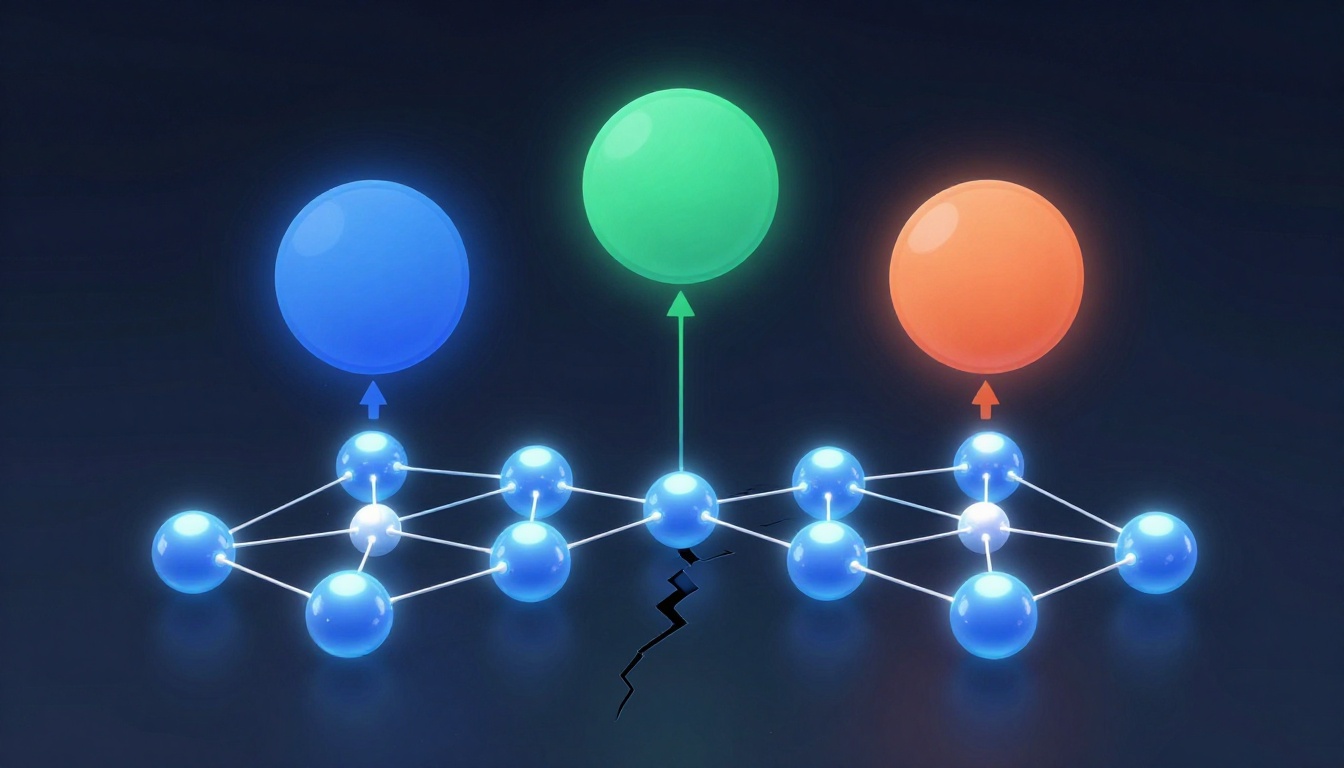
Imagine your e-commerce site humming along on Black Friday. Suddenly, a network glitch splits your databases. Customers see empty carts or old inventory, sales plummet, and chaos ensues.
This nightmare stems from the CAP Theorem. Eric Brewer proposed it back in 2000. In distributed systems, you can only guarantee two out of three properties: consistency (every read gets the latest write), availability (every request gets a response), or partition tolerance (the system keeps running despite network failures).
You can’t have it all because networks fail sometimes. Modern apps like social media feeds or cloud storage face this daily. Instagram prioritizes availability so you always scroll, even if a post lags a second. Amazon picks consistency for orders to avoid double-charging you.
The CAP Theorem forces tough choices. Pick CP (consistent but sometimes down), AP (available but eventual consistency), or CA (rare, ignores partitions). Wrong pick tanks your app’s performance or reliability.
That’s the role of the CAP Theorem: balancing consistency, availability, and partition tolerance. It guides architects building scalable systems today. Without it, you’d chase unicorns.
In this post, you’ll grasp the basics fast. We’ll cover trade-offs with everyday analogies, like a busy kitchen crew syncing orders. Then, real examples from Netflix streaming without hiccups or Google’s Spanner bending rules smartly. Finally, practical tips help you choose the right combo for your project.
Ready to master these trade-offs? Let’s break down each property first.
What the CAP Theorem Building Blocks Really Mean
Eric Brewer first described the CAP Theorem in 2000. Then, in 2002, Gilbert and Lynch proved you can’t achieve all three guarantees at once. So, these building blocks force you to prioritize. Let’s unpack each one with simple examples. You’ll see why your app’s design depends on smart choices here.
Consistency: Making Sure Everyone Sees the Same Data
Consistency ensures every read shows the latest write. Think linearizability, the gold standard. After you write data to one server, any read from any server gets that fresh value right away. No delays or old copies sneak in.
Picture a shared notebook in a team meeting. You jot down the new project deadline. Everyone flips to that page and sees it instantly. No one works off yesterday’s note. That’s strong consistency in action.
However, strong consistency differs from eventual consistency. In strong mode, data syncs immediately across nodes. Eventual means nodes catch up later, so reads might show stale info briefly. Banks rely on strong consistency. Imagine checking your balance after a deposit. You expect the exact amount, not a lag that shows you’re overdrawn. Otherwise, trust vanishes.
Pros shine bright. Users get trustworthy data every time. Decisions stay accurate, like confirming a flight seat before takeoff. Yet, cons hit hard. Syncing takes time and locks nodes, so responses slow down. During peak loads, your app might queue requests or reject some.
In short, consistency builds reliability. But it trades speed for accuracy. For your first app, ask if users need perfect data now or can wait a bit.
Availability: Keeping Your System Always Ready to Respond
Availability means every non-failing node answers every request. Even if parts break, healthy nodes keep serving users. No “try again later” errors.
Consider a vending machine in your office. You insert a dollar for chips. It always spits out something, maybe the wrong flavor if low on stock. But it never stays silent. That’s availability: respond, even if imperfect.
During network splits, CAP says available systems ignore the outage. Healthy sections stay online. Users remain happy because apps don’t crash. Netflix nails this. When you hit play on a show, it streams fast, everywhere. Downtime kills viewers; they switch apps quick.
Tie this to SLAs, like 99.99% uptime. That means under 5 minutes down per month. Businesses promise it to keep customers. Pros include steady revenue and loyal users. No one abandons a site that always works.
Cons appear, though. You might serve stale data to keep things moving. A user sees old prices during a flash sale. Still, it’s better than nothing for most cases.
For your app, availability keeps the lights on. Prioritize it if downtime costs more than fresh data.
Partition Tolerance: Surviving Network Glitches and Failures
Partition tolerance handles network splits. Messages drop between nodes, yet the system runs on. In real-world setups, P is non-negotiable. Modern distributed systems span data centers or clouds. Glitches happen often.
Imagine friends texting during a storm. Signals fail, groups split. But each side keeps chatting within their bubble. The whole network survives because no one stops.
Pros make systems resilient. Apps stay up despite failures. Data centers in New York and LA lose their link? Local ops continue. That’s why P always wins in CAP. You can’t avoid partitions; build for them.
This forces choices. During a split, pick consistency or availability. CP systems halt writes to stay accurate. AP ones serve old data to remain responsive. CA setups pretend no partitions exist, but they fail in reality.
Take eBay auctions. Bids must sync, but if servers partition, availability might dip to keep bids true. Or social feeds like Twitter serve cached posts during outages.
P acts as the wildcard. It pushes you to design around failures from day one. For your project, embrace it early. Test splits to see how your app holds up.
The Tough Choices: CP Systems vs AP Systems in Practice
Networks fail. Partitions happen. The CAP Theorem hits hard here. You guarantee consistency and partition tolerance (CP), or availability and partition tolerance (AP). CA systems skip partitions, but they rarely work in real distributed setups. Picture a triangle with C, A, and P at each corner. Connect any two points. That’s your choice. You can’t grab all three because, well, you can’t eat your cake and have it too.
CP systems lock down data accuracy. They block requests during splits to keep everything in sync. AP systems push responses out fast. They accept eventual fixes later. Both scale well, but your app’s needs decide. Let’s look closer.
CP Systems: Locking in Data Accuracy Above All
CP setups pick consistency first. During a partition, they pause operations on affected nodes. No stale reads slip through. Writes wait until the network heals. This keeps data rock-solid.
Take MongoDB in strong consistency mode. It syncs replicas before acknowledging writes. HBase does the same in Hadoop clusters. It uses ZooKeeper for coordination. Even traditional SQL shines here, like Google’s Spanner with its TrueTime tweaks for global sync.
Pros stand out. You get ACID transactions that users trust. Financial apps love this. Banks track ledgers without errors. A deposit shows up instantly everywhere. No double-spends or lost funds.
Yet, cons bite. Downtime hits during splits. Healthy nodes might idle too. Response times spike as the system waits.
Consider a real case. Trading platforms use CP for order books. One glitch can’t fake prices or trades. Safety rules it.
Choose CP for apps where errors cost big. Think healthcare records or legal contracts. Data accuracy trumps speed. Scalability comes from sharding, but test partitions early. In short, CP builds trust in high-stakes spots.
| Aspect | CP Advantage | Trade-off |
|---|---|---|
| Data Sync | Immediate across nodes | Blocks during partitions |
| Use Case | Banking, inventory locks | Downtime risks uptime |
| Examples | HBase, Spanner | Slower peak throughput |
This table shows why CP fits precision work.
AP Systems: Staying Online No Matter What
AP systems chase uptime. They respond to every request, even in partitions. Data might lag, but users stay engaged. Eventual consistency fixes mismatches over time.
Cassandra leads here. It spreads data wide and heals via gossip protocols. Nodes chat updates when links return. DynamoDB powers Amazon similarly. CouchDB and Riak follow suit with tunable consistency.
Pros deliver big. High throughput handles floods. Fault tolerance shines; one data center down? Others serve. Scalability soars with easy adds.
Cons show up as temporary glitches. A user sees old stock in a cart. It sorts out soon, though.
Real-world wins abound. Twitter feeds stay live during spikes. Posts appear fast, sync later. Amazon carts let you shop amid chaos. No empty screens kill sales.
Gossip protocols help. Nodes share hints about changes. They pull full data on reconnect. Smart replication keeps copies fresh enough.
Pick AP for user-facing apps. Social sites or e-commerce thrive here. Traffic matters more than perfect sync. Downtime loses users fast.
| Aspect | AP Strength | Drawback |
|---|---|---|
| Uptime | Always responds | Eventual consistency |
| Throughput | Handles massive loads | Brief data conflicts |
| Examples | Cassandra, DynamoDB | Needs conflict resolution |
AP keeps the party going. Balance it with read repairs for cleaner data. Your high-traffic app will thank you.
Seeing CAP at Work: Examples from Big Tech and Databases
Big tech companies live the CAP Theorem every day. They pick CP or AP based on user needs. Google Spanner goes CP with its TrueTime clock. CockroachDB and etcd follow suit. Amazon DynamoDB and Apache Cassandra embrace AP for speed. Redis clusters lean AP too. These choices power everything from banking apps to social feeds. No system grabs all three perfectly. That’s why extensions like PACELC matter. It adds latency: during partitions (P), choose C or A; without (ELC), pick consistency or low latency. Hybrids tune dials for balance. Imagine Netflix switching to CP. Streams would pause during network splits to sync data. Viewers bail fast. So, they stick AP. Let’s dive into real examples.
Databases That Nail CP Choices
Google Spanner picks CP with TrueTime. This atomic clock syncs global nodes. During partitions, it pauses writes until links heal. No stale data escapes. Banks adore it because ledgers stay exact. One firm cut fraud risks by 40% after switching.
CockroachDB mirrors this. It uses Raft consensus. Partitions trigger unavailability on split nodes. Healthy ones wait too. Financial apps thrive here. A major bank handles 10,000 transactions per second without errors. Yet, trade-offs sting. Peak loads slow as sync waits build up.
etcd powers Kubernetes coordination. It locks on consistency. Partitions halt updates. DevOps teams love the reliability for configs. However, it skips high-write chats.
Success stories pile up. Banks pick these because errors cost millions. A stock exchange uses similar setups. Trades match perfectly.
Still, downtime during splits frustrates. You face slower responses. Test often.
Here’s a quick scan:
- Spanner: Global sync via TrueTime; banks cut disputes.
- CockroachDB: Raft for ACID; handles finance spikes.
- etcd: Simple locks; Kubernetes essential.
CP shines where trust rules. But availability dips.
AP Champs Powering Massive Scale
Amazon DynamoDB owns AP. It serves every read-write, even in partitions. Data reconciles via vector clocks later. E-commerce wins big. During Prime Day, it swallows millions of writes per second. Carts stay live; sales soar.
Apache Cassandra spreads data wide. Gossip protocols share updates. Nodes fix conflicts on reconnect. Netflix streams billions of events daily without hiccups. It tunes consistency per query. Weak reads fly fast; strong ones wait.
Redis clusters go AP with replication. Partitions let async copies lag. Then, they merge. Social apps like Twitter use it for feeds. One platform hit 100,000 ops per second per node.
E-commerce stories impress. Shopify relies on Cassandra. Flash sales handle surges; old stock vanishes quick via repairs.
Trade-offs? Brief inconsistencies pop up. A user grabs the last item twice. Apps resolve with last-write-wins.
Key strengths in action:
- DynamoDB: Vector clocks heal data; Prime Day hero.
- Cassandra: Gossip for scale; Netflix backbone.
- Redis: Async reps; real-time feeds.
AP keeps users hooked. Reconciliation fixes the rest. For massive traffic, it’s gold.
How to Pick Your CAP Balance for the Perfect System Fit
You know the CAP trade-offs now. Next comes the real work: picking CP or AP for your app. Start by facing facts. Does downtime crush your revenue? Do data mismatches spark fights? Social apps lean AP because users hate blank screens. Finance picks CP since errors cost fortunes. Map your needs first. Then test hard. Kubernetes helps orchestrate it all. Monitor partitions closely and tune consistency levels. Serverless options shift things too. Follow these steps to nail your choice.
Step-by-Step: Matching CAP to Your App’s Needs
First, list your priorities. Users expect quick responses, so weigh that against data accuracy. E-commerce sites chase availability; healthcare demands consistency.
Next, model failures. Sketch network splits. Ask how your app behaves when nodes lose touch. Tools like draw.io help visualize.
Then, test with chaos engineering. Inject faults using Chaos Monkey or Gremlin. Watch what breaks. AP systems stay up but show stale views. CP ones pause for sync.
Finally, pick your database. Social platforms grab AP like Cassandra. Banks choose CP with CockroachDB.
Industry examples guide you:
- Finance: CP rules. Downtime hurts less than bad trades. Use Spanner for ledgers.
- Social media: AP wins. Feeds must load. Cassandra handles spikes.
- E-commerce: AP first. Carts stay open. DynamoDB shines.
- Gaming: AP for leaderboards. Speed beats perfect scores.
Use this checklist to decide:
- Does downtime kill business? Yes? Go AP.
- Data fights critical? Yes? Pick CP.
- High reads, low writes? AP fits.
- Global sync needed? CP works.
Tune as you grow. Serverless like FaunaDB adds flexibility.
Top Tools and Databases to Get Started With
Begin with proven starters. CP fans love PostgreSQL Citus for sharding SQL. It scales queries across nodes. Vitess shards MySQL for big loads. Both offer free tiers.
AP setups start with FaunaDB. Serverless queries run global. ScyllaDB boosts Cassandra speed. Free community editions ease trials.
Check docs for quick setup. PostgreSQL Citus has solid guides. FaunaDB docs cover auth fast.
Here’s a pros/cons snapshot:
| Database | Type | Pros | Cons | Free Tier |
|---|---|---|---|---|
| PostgreSQL Citus | CP | SQL familiar; scales writes | Setup complex | Yes |
| Vitess | CP | MySQL compatible; high TPS | Learning curve | Yes |
| FaunaDB | AP | Serverless; global edges | Query limits on free | Yes |
| ScyllaDB | AP | Cassandra fast; low latency | Migration from C* needed | Yes |
Integration tips simplify. Pair with Kubernetes for deploys. Use Helm charts. Monitor with Prometheus; alert on partitions. Start local, then cloud.
Tune consistency per query. AP databases let you dial strong reads when needed. Test loads early. These tools get you running fast, so experiment now.
Conclusion
The CAP Theorem boils down to one truth. Networks fail often. You guarantee just two of three: consistency, availability, or partition tolerance. Smart teams know their priorities first. Then they pick CP for accuracy or AP for uptime.
Your Black Friday e-commerce site dodges chaos this way. Banks avoid errors. Social feeds keep scrolling. These trade-offs create systems users trust.
Audit your stack now. Match it to your needs with the checklist we covered. Share your choices or challenges in the comments. What CAP combo powers your app?
Edge computing tests these rules next. Yet, grasp CAP today. You build apps that thrive through any split.